Events

The next Chicago Food Swap will take place on May 12 at The Scrumptious Pantry in Logan Square. Registration is now open. As always, to find out more about the Chicago Food Swap, check out our website or join the conversation on our Facebook page.

Co-Founder

Photobucket
Blog Grade for www.westoftheloop.com
BlogWithIntegrity.com

Why Preserve Food at Home?

Rhubarb-rose petal preserves were one of the prettiest things I made last year.

Rhubarb-rose petal preserves were one of the prettiest things I made last year.

Spring is finally here and with the arrival of spring fruits and vegetables like strawberries, rhubarb, asparagus, ramps, and fava beans, I have a lot of cooking and preserving projects on the horizon. Strawberry rhubarb jam, pickled asparagus and a freezable fava bean sauce are some of my first preserving projects of the season. Spring is fleeting, but my family can savor the taste of it all year long.

Home food preservation seems to be on a lot of people’s minds right now. I have been getting a lot of requests for canning lessons lately and I am excited to be teaching a

canning demonstration class at the River Forest Whole Foods on Saturday April 20 at 1 pm as part of the store’s Earth Week celebration. (The demo is free but call ahead to reserve your spot: 708-366-1045.) People often ask me why I enjoy canning so much and what the benefits of home food preservation are. My students get to hear my whole explanation in person, but I thought I should share it with my readers as well.

So, here it is. My thoughts on why it is worthwhile to preserve food at home:

  • Know what is in your food. I started canning, now some 5 years ago, because I wanted a kitchen project that I could do with Zuzu. At the time, Zuzu was allergic to wheat, dairy, eggs, nuts and peanuts, so we couldn’t exactly bake cookies together. I started making jam because all of the necessary ingredients — basically fruit and sugar — were safe for my daughter. There are so many people today with food allergies, food sensitivities and other dietary restrictions. There are also many people out there who are concerned about the chemicals and preservatives that are found in their supermarket staples. For people in both of these categories, home food preservation is a way to know exactly what is going into their food. When you make your own jam, pickles, salsa or ketchup, you know exactly what is and is not in that jar or bottle. No need to decipher labels or search high and low for food that is free from chemicals and artificial preservatives.
  • Save money. Another reason I started canning? Because I always bought too much at the farmers’ market. One day I came home with a flat of strawberries because the flat, which is 8 quarts, was the same price as 6 quarts. “That’s like getting two free quarts of berries,” I told my husband. “But what are we going to do with 8 quarts of strawberries,” he asked. Buying in bulk and taking advantage of sales can be a great way to save money on fresh fruits and vegetables but only if you actually use what you buy. If you know how to preserve food, you can take advantage of sales like the one at my Whole Foods recently: ten mangoes for $5. I don’t know if you could eat ten mangoes before some of them went bad. But I turned my ten mangoes into three pints of mango salsa that are sitting in my basement just waiting for grilling season.
  • Preserve the season. We are now so used to having asparagus and tomatoes all year round, but before refrigeration, people understood these crops to be seasonal. You ate asparagus in the spring, peaches in the summer and tomatoes in the late summer and fall. If you wanted to enjoy these seasonal fruits and vegetables all year round, your only option was to preserve them. If you have ever eaten fresh asparagus that was picked only days before, or a sun-ripened local tomato, you know how much better these crops taste when you eat them in season. My family doesn’t only eat seasonally — JR wants grapes year-round, thank you very much — but I try very hard to emphasis local and seasonal produce as much as possible for reasons of taste, economy and environmental sustainability. By preserving local fruits and vegetables when they are in season, I can enjoy them long after they have left the farmers’ market bins.
  • Stock your pantry. As I mentioned in my post about tomatillos, having a pantry stocked with sauces, salsas and relishes helps make dinner preparation easier all year long. When I need to create a Mexican-inspired dish in January, I just pull some tomatillo sauce up from my basement. When I want to jazz up a pasta dish or a homemade pizza, I reach for one of the many jars of marinated red peppers that I put up in late summer when peppers are inexpensive and plentiful.  And my homemade preserves make special and attractive presents during the holiday season, and indeed whenever I want to thank someone or bring a hostess gift. That shelf full of homemade jams, pickles, and salsa in my basement is a very handy thing to have indeed.
  • Have fun! Canning is fun, y’all. You kind of feel like Ma Ingalls when go out apple-picking with your kids, come home and make pint after pint of applesauce. Your friends always seem amazed when you present them with a jar of homemade pickles or jam. And it’s honestly not that hard.

Thinking of giving canning a try? If you are local to Chicago, feel free to contact me about a lesson or attend one of my demonstrations. If you live elsewhere, don’t worry. Look into canning class in your area — Google is your friend here. There are also many canning blogs and cookbooks devoted to helping a beginner get started. Ones I like include:

  • Ball Complete Book of Home Preserving by Kingry and Devine
  • Ball Blue Book Guide to Preserving
  • Well-Preserved by Eugenia Bone
  • The Joy of Jams, Jellies and other Sweet Preserves by Linda Ziedrich
  • Food in Jars by Marisa McClellan and her blog of the same name.

Orange Sea Salt Caramels

A tray of orange sea salt caramels before cutting.

A tray of orange sea salt caramels before cutting.

I cooked and baked a lot with blood oranges back during the fleeting few weeks when they were available. Remember that? Some of the recipes I used called for blood orange juice, but I always zested the fruit before squeezing the juice, so as not to waste all the flavor and oils that are found in the outer layer of peel. I originally came up with a recipe for Blood Orange Sea Salt Caramels as a way to use up some of that extra zest. The caramels came out great and I enjoyed giving out bags of them as small gifts and thank-yous.

The blood oranges are long gone, but I am still tinkering with my caramel recipe. Recently, I learned to infuse the cream with the orange zest — as opposed to just sprinkling zest on top of the candies — in order to perfume the whole batch of caramels. Infusing cream is a trick I learned from Katherine Duncan, owner of Katherine Anne Confections, the local artisan candy company that has been a great supporter of the Chicago Food Swap. I have consulted multiple recipes for caramels, including one by ex-pat pastry chef David Lebovitz, which is good except for the too-high temperatures he gives, and the one set forth below has all the elements I like and none that I do not.

You can vary this recipe in countless ways by infusing your cream with herbs, such as thyme or lavender, or spices like cardamom. I do recommend that you take the time to search out the freshest cream possible — one that is not ultra-pasteurized and that does not contain stabilizers. The Chicago Tribune recently had an informative article about the differences between raw milk, pasteurized milk and ultra-pasteurized milk. For one thing, ultra-pasteurized milk or cream is likely to be less fresh because the very purpose of ultra-pasteurization is to increase shelf-life. I’ve had luck using cream by Kilgus Farmstead or Kalona Supernatural brands, both of which are readily available at Whole Foods and on Artizone.com.

I have had bad luck, however, with candy thermometers in the past.  Most notably, there was the time I had to toss a batch of apricot-red currant jam after my candy thermometer broke in the pot. As I poured $25 worth of fruit and several hours of effort down the drain, I swore I would never use a candy thermometer again. But then I became interested in candy-making, and you simply cannot make candy without a good thermometer. It’s a small investment in both money and space but it will save you many a ruined batch of candy. Just never let the thermometer touch the bottom of your pot!

Orange Sea Salt Caramels
Makes approximately 5 dozen caramels

Zest of two oranges
1 cup cream
4 TB unsalted butter
½ tsp. vanilla extract
1 tsp. sea salt
½ cup light corn syrup
1 ¼ cup sugar
¼ cup water

Place half the orange zest in a small saucepan. Pour the cream over it and stir to combine. Heat until almost but not quite boiling, when the cream reaches 200 degrees. Turn off heat and set aside for 30 minutes. Once cream is infused, add 2 TB of the butter, the vanilla and ½ tsp of the sea salt to the cream mixture and reheat to a simmer.

Line an 8×8 baking pan with heavy-duty aluminum foil so that the bottom and the sides are covered. Brush the foil with oil or spray with a nonstick cooking spray.

Meanwhile, in a large, heavy-bottomed pot, combine the corn syrup and the sugar. (Stir to dissolve the sugar, but once the sugar is dissolved, do not continue to stir the mixture. Doing so will cause the sugar to crystallize. Swirl the pan instead.) Bring to a boil over high heat. Boil until the mixture takes on a golden brown color and you smell caramel. Remove from heat. Watch carefully for it only takes a minute for the mixture to go from caramelized to burnt!

Add the cream mixture to the caramelized sugar and stir to combine. Over medium-high heat, bring the caramel to 238 degrees, or the “soft ball” stage, stirring frequently to prevent scorching. Remove from heat. Stir in the remaining two TB of butter and carefully pour the mixture into the prepared pan. Allow to set for a few minutes. Then sprinkle the remaining orange zest and sea salt on top of the caramels. Allow to harden for several hours.

Once the caramels are hardened, cut them into bite-sized squares or rectangles. If you are having trouble cutting the caramel, heat your knife over the stove for a few seconds. Wrap the caramels in 4X5 rectangles of wax paper or cellophane, twisting the ends to close, for storage and giving.

You can buy pre-cut candy wrappers at craft stores or online which will save you a lot of time over cutting your own. I just use regular wax paper, which has an old-fashioned look, and enlist a lot of helpers. My husband cuts the squares while the kids and I wrap.

 Caramels are a great first project for the novice candy-maker. I hope you are tempted to give this a try.

Chicken Tomatillo Stew

Colorful veggies and tart tomatillos liven up this easy-to-make chicken stew.

Colorful veggies and tart tomatillos liven up this easy-to-make chicken stew.

Tomatillos are one of the more misunderstood fruits out there. Perhaps because of their name or because they are often used to make salsa, many people associate them with tomatoes. But in fact, tomatillos are members of the nightshade family. Their closest relatives are the gooseberry or the ground cherry — a late-summer farmers’ market crop that is the size and color of a cherry tomato, but likewise is not in the tomato family. (I always chicken out about buying ground cherries when I see them at the farmers’ market because I’m just not sure how to use them. This summer, though, I hope to be more courageous. I promise to report back.)

Tomatillos and their cousins all come in papery husks that should be removed prior to use. The fruit can sometimes be a bit sticky under the husk, but the stickiness washes off easily with water. Look for firm, round fruit without wrinkles, which are a sign of age. Tomatillos have a tart, fruity taste which pairs well with sweet vegetables like peppers and corn and brightens up any dish that contains them. You can find tomatillos year-round in well-stocked grocery stores or Mexican markets, but they are readily available in the summer at many farmers’ markets.  Jarred tomatillo salsas are also easy to find, often under the name “salsa verde.” Chicago celebrity chef Rick Bayless’s brand of tomatillo salsa gets particularly good reviews.

I love tomatillos and I buy them in large quantities at the farmers’ market during the summer months. Using a recipe from Eugenia Bone’s book Well-Preserved, I put up as many quarts of spicy tomatillo sauce as I can manage knowing that I will use the sauce to create flavorful stews and Mexican-inspired dishes all winter long. To make the sauce, I first blanch the tomatillos in boiling water for a few minutes. Then, I puree them in my food processor and simmer the pureed tomatillos with onions, garlic, lemon juice and roasted hot peppers to make a tart sauce with just a little heat. I use this versatile sauce  in dishes like chicken enchiladas with salsa verde and chilaquiles.

This week I used my very last quart of tomatillo sauce to make a flavorful, veggie-laden chicken tomatillo stew that almost tricked me into believing that it was summer again. But if you don’t happen to have homemade tomatillo sauce in your pantry, and don’t feel like making some, this recipe would work very well with any tomatillo salsa that you can find in your supermarket.

This recipe is a great introduction to tomatillos for those of you who aren’t familiar with this tart green gem. If you already love tomatillos from sampling them at your favorite Mexican restaurant, here is a fun way to bring their unique flavor home. I roasted two chicken breasts especially for this stew, but any leftover cooked chicken will do. Also, I served my stew over polenta that I flavored with some sharp cheddar cheese. But it would also work well on its own or over rice. Garnish the stew with chopped fresh cilantro and diced green chiles.

Chicken Tomatillo Stew

2 bone-in chicken breasts
5 TB olive oil
1 yellow onion, diced
3 cloves garlic, minced
2 bell peppers ( I used one red and one yellow), chopped
1 zucchini, diced
1 tsp. each cumin and coriander
1 quart tomatillo sauce or salsa
12 oz. beer
1 cup corn kernels (frozen is fine, especially at this time of year)
1/4 cup chopped cilantro (optional)

Preheat oven to 375. Place chicken breasts on a baking sheet and brush with 2 TB of the olive oil. Season well with salt and pepper. Roast for 40 minutes until cooked through. Allow to cool. Remove meat from bones and shred into bite-sized pieces. (This step may be done in advance.) Set chicken aside.

In a large, heavy Dutch oven, heat remaining 3 TB of olive oil over medium heat. Saute onions over medium-low heat until translucent. Add the garlic and bell pepper and continue to saute until tender, about 10 minutes. Add zucchini and season with cumin, coriander, salt and pepper. Saute 1-2 additional minutes until fragrant. Add chicken, tomatillo sauce and beer and bring stew to a boil. Turn heat down and simmer until thickened about 30 minutes. Add corn kernels and simmer for a few additional minutes until the corn is heated through. Garnish with chopped cilantro. If desired, serve over polenta or rice.

I hope you are inspired to get creative with tomatillos soon!

Recap of the April Chicago Food Swap

Unusual flavors of fudge from the April Chicago Food Swap

Unusual flavors of fudge from the April Chicago Food Swap

Breakfast this morning was a homemade whole wheat bagel with cream cheese for JR and two chocolate chip muffins for Zuzu. (Me? Why, I had a lemon buttermilk doughnut, thank you very much.) I packed Zuzu’s lunch box with three homemade Filipino egg rolls — also known as lumpia — and some spinach orzo salad with feta and pine nuts. This kind of weekday feasting can only mean one thing: it’s the day after the Chicago Food Swap.

This past Sunday was the April Chicago Food Swap held at Local Goods Chicago, a charming and eclectic boutique featuring clothes, jewelry, crafts and foods by Chicago-area artisans. Although the space was tight, our gracious host made room for us by re-arranging her store, and we appreciate all her hard work. I know many of our swappers were entranced by Local Goods Chicago’s wares, especially the Chicago-themed ones. If you are looking for a unique birthday, baby, wedding or house gift, you should definitely stop by Local Goods Chicago. Zuzu picked up a ring and headband for herself and I bought a beautiful hand-crocheted blanket for a friend’s new baby.

But, back to the food. As always, the swap offerings were diverse, creative and delicious. On the savory side, there were several varieties of bagels and crackers from first-time swapper Katherine; pepperoni rolls made by Todd; Filipino eggrolls from Pamela — who

scored a huge hit in February with her empanadas — Bolognese sauce from veteran swapper Serena; spinach-orzo salad from Michelle; and some dips and spreads, including spinach pesto, my own pumpkin seed pesto, vegan garden pâté and hummus. It’s always interesting how swap items come in waves. At the February swap there were at least three different kinds of hummus on offer; this time, I was the only one who brought hummus.

Naturally, there were also many decadent sweets. We had two different kinds of fudge; delicate citrus-scented palmiers from Jules and chocolate chip muffins from her sister Melisa; Mexican chocolate pound cake from Nancy — which I really meant to get, darn it! — stunning chocolate espresso tarts from new swapper Sandy; two different varieties of doughnuts from Chef Druck and family; salted caramel sauce; Julie’s tiger butter bark, which looked as good as it tasted; and professional-looking carrot cake cupcakes — those I did get, yum!

Beautiful jars

Beautiful jars

As always, we had plenty of food in jars. Pauline brought her global cuisine-inspired hot sauces, like Peri-Peri and Indian green chutney; Erielle made grapefruit-ginger curd; and I saw jams, marmalade and pickled vegetables of all kinds. Something new this time: swappers Melisa and Jules, who aren’t canners themselves, brought back empty jars from previous swaps for people to take home and re-use. What a terrific and eco-friendly idea! Drink syrups are always popular swap items and we had a few goods ones. In addition to my sour cherry syrup, we had date cola and coffee syrup from Nancy and ginger brandy from Meg, which smells divine. I was lucky enough to score a bottle

I am always intrigued by swap items that aren’t to eat right away but rather are designed to help you cook better in the coming weeks. Among the pantry items that I saw were flavored salts including lemon rosemary and Sriracha from swapper Katje. Pauline, who as we know loves all things spicy, was so inspired that she went home and made hot sauce-infused salt that same night.  That is the beauty of the Chicago Food Swap in a nutshell. Not only do you come home with loads of delectable goodies, you also come home with new ideas of things to try in your own kitchen.

One of my favorite things about the Chicago Food Swap is how it brings together a diverse crowd of people who share one important trait: a love of making their own food. Like all of our events, this swap drew men, women and kids from all over the Chicago area. These people came together on a beautiful spring Sunday just to trade homemade food with one another. Many of us enjoy cooking for friends and family because it is a way to love and to nurture them. Cooking food to trade with strangers – or even acquaintances – is different. It is a true expression of pride, passion and faith. And from that shared passion and faith, we have built a community.

The May 12 Chicago Food Swap at The Scrumptious Pantry is now completely full. If you still would like to join us at that event, please put your name on the wait list. We always end up opening some spots. Also, stay tuned for updates about future events, including, we hope, our biggest swap yet!

What I Am Making for the Chicago Food Swap

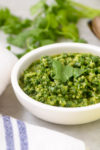
Pumpkin seed pesto has a nutty flavor without nuts.

Pumpkin seed pesto has a nutty flavor without nuts.

The April Chicago Food Swap is only a few days away and I am excited to see the returning swappers and meet the first-time swappers. Our host for the April swap is Local Goods Chicago, an adorable boutique on the far north side of the city that features clothes, crafts and housewares from local artisans. The idea of showcasing local, handmade items as Local Goods Chicago does is perfectly in keeping with the spirit of the Chicago Food Swap, so I am delighted that we are partnering with this store. Local Goods Chicago also offers classes and events for both kids and adults on topics ranging from card-making to canning demos to book signings and truffle samplings. What a cool place!

Last weekend, I had the terrible realization that the food swap was only one week away and I had not yet finalized what I was going to bring. (What can I say? I’m a planner.) I went through a million ideas in my head based on what I had been cooking lately — caramels? spice mixes? homemade pasta? — but then decided to give myself a challenge. I decided that I would not run out and buy any special ingredients to make my swap offerings. Rather, I decided to use the upcoming swap as an opportunity to force myself use up some of the ingredients in my pantry and freezer.

The first thing I decided to make was sour cherry syrup because I still had four pounds of frozen, pitted sour cherries left over from the summer. I have made sour cherry syrup in the past and it is absolutely delicious with seltzer or in Prosecco as an aperitif. I like this recipe from Indian cooking expert Madhur Jaffrey. The amount of sugar is a little terrifying, but I have tried making it with less sugar and I did not get the syrupy texture that I was looking for.

Next, I decided to make pumpkin seed pesto. I had seen pumpkin seed pesto on a restaurant menu over the summer and was intrigued by the idea. While she can eat pesto made with pine nuts — which are actually a seed, not a nut — Zuzu cannot eat pestos made with tree nuts because of her allergies. So I liked the idea of trying a nut-free pesto. Also, raw pumpkin seeds sell for about half the price of pine nuts, making pumpkin seed pesto a more economical choice.

I had bought some raw (or green) pumpkin seeds from the bulk food area of my local Whole Foods some months ago, but never got around the making the pesto. This is just the kind of thing I do all the time, which is why my pantry is always bursting at the seams. Anyway, using up esoteric items languishing in my cupboard was the whole point of my swap challenge, so pumpkin seed pesto it was!

Happily, the pumpkin seed pesto came out great. I loved the coarse texture and the nutty, unique flavor. This is a pesto that would work well on pasta, but also on grilled chicken or as a sandwich spread. The only problem was that the amount of pumpkin seeds that I had on hand only made three little jars of pesto. Clearly not enough to swap! So I violated my rule and went back to the store for more pumpkin seeds and more basil. Oh well! So

I didn’t live up to the terms of my challenge, but I do have a cool item to swap next Sunday. Looking forward to seeing some of you there.

Pumpkin Seed Pesto
No need to wait for Halloween! Raw, or green, pumpkin seeds are easy to find year-round. Check the bulk foods section of your local grocery store.
Makes 1 ½ cups

1½ cups green pumpkin seeds*
¼ cup plus 2 TB extra-virgin olive oil
3 cloves garlic
2 cups basil leaves, loosely packed
Juice of ½ a lemon
½ cup water
Salt and pepper to taste

Preheat the oven to 375. In a large bowl, toss the pumpkin seeds with 2 TB of the olive oil. Sprinkle with kosher salt and freshly ground pepper. Spread seeds in a single-layer on a baking sheet and roast until puffed and brown, 10-15 minutes. Allow to cool.

In a food processor, combine pumpkin seeds, garlic, basil leaves, and lemon juice and pulse until mixture resembles a coarse paste. With machine running, slowly add remaining ¼ cup olive oil in a steady stream. Scrape down sides with a rubber spatula. Add the water and pulse to combine until the mixture resembles a chunky paste.

*Raw pumpkin seeds are sometimes called “pepitas.”

Care to join us for a future meeting of the Chicago Food Swap? Registration for our May 12 swap at The Scrumptious Pantry is now open. But hurry! We are already more than half full. (You can always put yourself on the waiting list if you are too late to snag a spot. We always end up taking some people off the waiting list.) We should be announcing future swap dates and locations soon. To stay abreast of the latest developments, be sure to “like” our Facebook page or check out our website.